

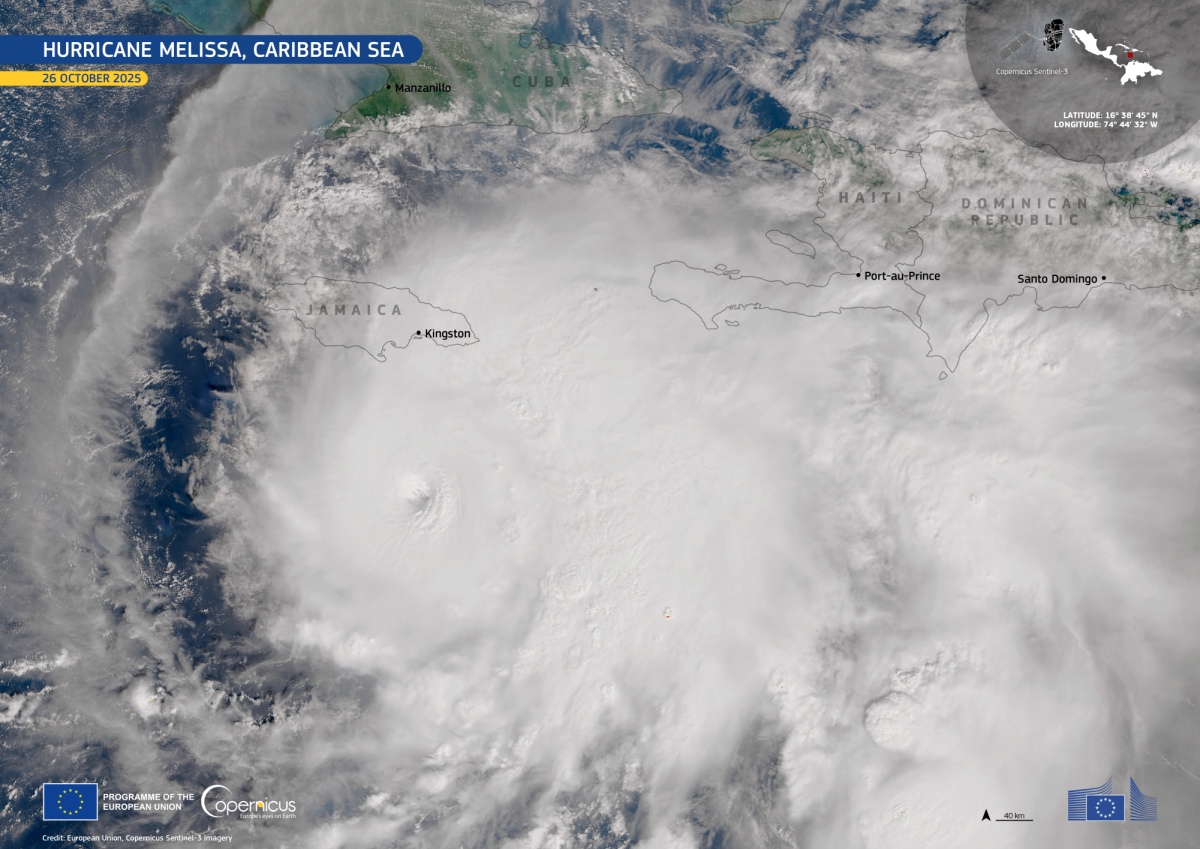
Hurricane Melissa was an extremely powerful Category 5 hurricane that caused a catastrophic path of destruction in Jamaica, and a few other countries. It holds the record as the strongest storm to ever make landfall in Jamaica.
About three quarters of the Jamaican island was left without power and under water, after Category 5 storm “Hurricane Melissa” hit the island. As wind and rain struck the island through the night, one official told BBC News the destruction resembled "the scene of an apocalypse movie."
Hurricane Melissa, the strongest storm to strike Jamaica in modern history, sped across the country on October 28, leaving the island devastated. At its peak, the hurricane sustained winds of 298 km/h (185 mph) – stronger than Hurricane Katrina, which devastated New Orleans in 2005 and killed 1,392 people. Melissa is also the strongest hurricane recorded this late in a hurricane season.
There have been a total of At least 29 deaths and 10 people missing in Haiti, A minimum of eight deaths have been confirmed in Jamaica, Four people have been reported dead in the Dominican Republic, and three deaths from flooding and landslides in Panama. Despite widespread destruction, authorities have not yet reported any deaths in Cuba, largely due to successful evacuation efforts.
Images showed cars almost completely submerged as visitors staying at the hotel were forced to evacuate their rooms to the hotel's ballroom to wait out the storm after it made a historic landfall. Melissa was a Category 5 for 36 hours — the longest previously was 18 hours.
In Jamaica, the storm caused mudslides, and palm tree fronds to be thrown across the island. Melissa moved north to Cuba as a category three storm, bringing 115 mph winds and heavy rain, and pounding the south-east of the island.
Hurricane Melissa caused significant material damage in Santiago de Cuba, the island’s second-most populated province. Melissa hit Cuba on Wednesday October 29, and later, the Bahamas. In Cuba, officials reported collapsed houses, blocked mountain roads and roofs blown off buildings Wednesday, with the heaviest destruction concentrated in the southwest and northwest. Authorities said about 735,000 people remained in shelters.
The storm also damaged crops such as coffee beans and yuca, blew over trees and poles, and affected communication services. Other eastern provinces of Cuba also reported damage to facilities such as hospitals and schools, as well as flooded streets and houses.
How Did Melissa Become So Dangerous?
A hurricane forms when warm, moist air rises from the ocean surface and creates a spinning system of clouds and storms. In the centre, air sinks, creating the eye, a calm, cloud-free zone surrounded by a wall of violent winds and rain known as the eye-wall.
Melissa's origins traced back to a cluster of thunderstorms off the coast of West Africa in mid-October. By October 21, it had reached tropical storm strength and by 26 October, it was a Category 4 beast churning through the Caribbean Sea.
Ocean temperatures in the Caribbean are unusually high this year and hurricanes feed off that warm layer of water. Those conditions allowed Melissa to intensify quickly.
"The ocean is warmer and the atmosphere is warmer and moister because of [climate change]," Brian McNoldy told BBC News.
While the wind speed was staggeringly high, the storm's movement was notably slow. Melissa itself was moving westward at around 5km/h on October 28, which is slower than a person's walking pace.