

9/11 Fades Away
On September 11, 2001, two towers fell, the Pentagon was hit, and a plane full of civilians crashed into a field in the deadliest terrorist attacks in American history. Despite this, scholastic conversations about 9/11 seem to be dwindling.
Numerous students were left unsettled after school on September 11, and not just because of the events which happened on that day 22 years ago: They looked back on that day, only to find that not a single teacher had discussed the attacks.
“Every generation has these defining events…I think it’s worthwhile to communicate those types of events to my students, to the younger generations,” math teacher Mr. Moyer said.
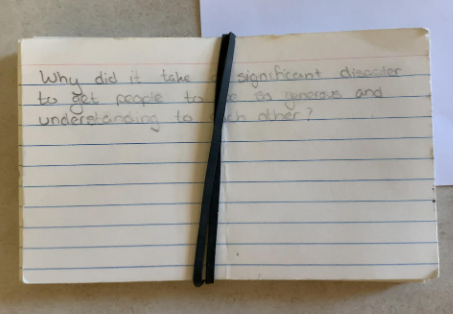
He has been teaching math for 27 years. Mr. Moyer has had students write down their feelings on notecards every single year since 2001.
“Every year I get them out, and just read through stuff and say, ‘here’s what students were thinking this day,’” Mr. Moyer said, referring to the cards from 2001.
The attacks hold great emotional power over those who remember that day, but for some at FHS the attacks are less than a distant memory.
“All the students now are born post 9/11,” AP Government and history teacher Mr. Barberree pointed out.
The attacks may not matter as much to students or teachers since so much time has passed.
“Everybody’s different, some teachers are on the younger side; if they were young enough, it might not be a distinct memory,” math teacher Mr. Moyer said.
Time is a limiting factor as well, with the importance of getting through all of the curriculum holding priority over discussing 9/11.
“History teachers have a curriculum that they have to get through. If it doesn’t fit in their curriculum, or maybe they talk about it at a different point in their curriculum,” Mr. Moyer continued.
Teachers could look to other American tragedies for guidance on how and when to discuss the attacks.
“Maybe they could require that it be touched on. I see it like December 7, Pearl Harbor, which we don’t necessarily teach on December 7, but we teach it in American history class. 9/11 does not have to be taught on September 11, but where it falls chronologically in the course,” continued Mr. Barberree.
He raises a valid point: D-Day is not talked about on June 6 and Pearl Harbor is not talked about on December 7, so 9/11 doesn’t have to only be talked about on that day. Still, the attacks are so closely tied with the date; it’s in the name. December 7 is a date which will never be forgotten, yet Pearl Harbor is not expected to be discussed on the day it happened. The only reason that 9/11 is discussed on 9/11 is that talking about the attacks on the day they happened has a powerful effect.
“It’s powerful to be able to talk to my students today, and be able to say, ‘my students were sitting where you are sitting today’. The real discussions taking place between young people, the ideas of different decisions that schools had,” Aaron Moyer continued.
Mr. Barberree has been talking about 9/11 on September eleventh every year up until this year, and the discussion was only omitted because of time in his APUSH classes. Mr. Moyer has been teaching for 27 years and has taken a day out of his math class to discuss 9/11 every year since 2001. It will be a long time before the terrorist attacks are forgotten but, like all other things eventually do, 9/11 seems to have started to fade away.